Summary and Features
The robotic system enables changes to load layouts and increases in the number of layers that conventional pallet changers cannot accommodate.
Maximize the load capacity per vehicle and resolve transportation capacity shortages.
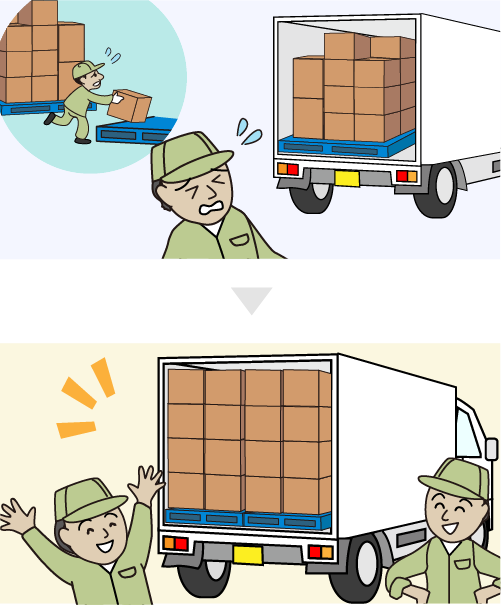
Due to stricter regulations on drivers’ overtime work resulting from the “2024 Problem,” it has become difficult to maintain the same level of transport capacity as before. To ensure sufficient transport volume with a limited number of drivers and vehicles, it is essential to maximize the amount of cargo that can be loaded onto a single truck. By optimizing the number of units loaded, the number of layers, and the layout to match the dimensions of the truck’s cargo compartment, and by eliminating the dead space that resulted from conventional fixed loading patterns, it is possible to increase the load capacity per trip. Improved loading efficiency leads to a reduction in the number of transport trips, addressing the structural challenge of driver shortages by tackling both labor savings on the ground and transport efficiency.
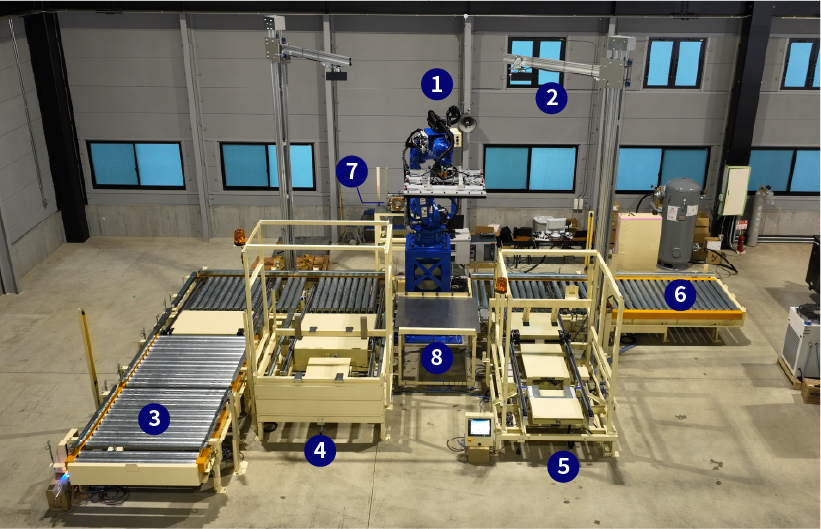
Main Equipment
-
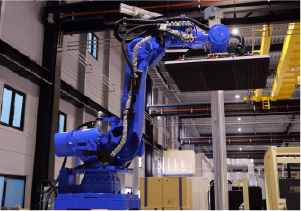
①Robot -
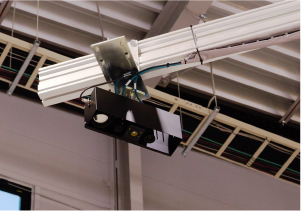
②Vision
Detects the amount of workpiece misalignment -
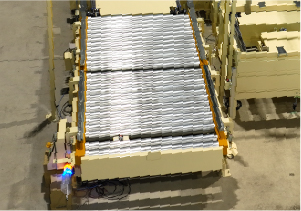
③Loading Area
We will bring in the full pallets before transshipment. -
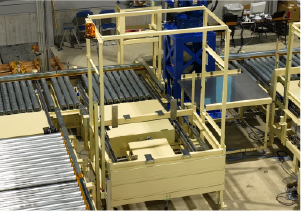
④Incoming Pallet Magazine
Stack the empty pallets after unloading -
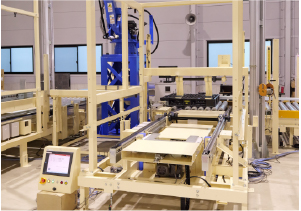
⑤Shipping Pallet Magazine
Cut out the shipping pallets one by one -
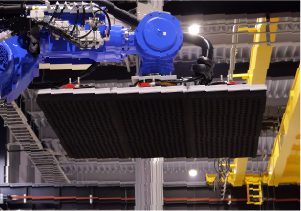
Adhesive Pad (Large)
Adhere one layer of the workpiece -
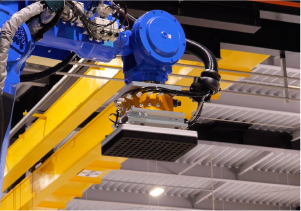
Adhesive Pad (Small)
Used to pick up one workpiece at a time -
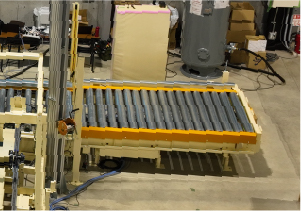
⑥Dispensing section
We will remove the pallets after they have been reloaded.
Options
-
⑦Tool changer
The robot will switch hands on the steering wheel -
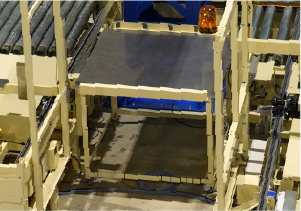
⑧Temporary Storage for Fractional Amounts
Place the odd-sized pieces on the top layer temporarily. After stacking, transfer the odd-sized pieces to the top layer.
Specifications
| Volume of cargo handled | MAX 800 kg pallet MAX 16 kg/robot payload |
|---|---|
| Pallet dimensions before transshipment | 1,500W×1,300L×147H (Indicates width and length relative to the loading direction) |
| Pallet dimensions after transshipment | 1,300W×1,100L×150H 1,200W×1,200L×150H 1,200W×1,000L×150H 1,100W×1,100L×150H (Indicates width and length relative to the loading direction) |